
2019 · The earliest traces
The first experiments
The earliest lead found dates back to July 2019. A Reddit thread posted a few months later links to a tweet by Makks about an experiment using a Season 1 client. According to the person sharing the link, it still needed extensive changes and was far from working.
The original tweet is no longer available, so it cannot establish which project came first or whether a playable server existed. What it does suggest is that people were already digging through old game files and trying to get them running before the better-known projects appeared.
Read the 2019 Reddit thread ↗2020 · The Polaris era
Returning to Season 1
In 2020, different tools tackled different parts of the problem. Neonite emulated the lobby, including its news, shop and interface. Its repository explicitly ruled out parties, matchmaking and online matches. Getting into the lobby was an early step toward restoring the game.
In September, Project Polaris announced its release. It let players run build 1.8, associated with Season 1, and explore the island alone. Discussions at the time described an old client combined with modding tools and a community backend. For many players, this was an early chance to actually revisit old Fortnite.

Guides from the same period also described local setups using FortTimeMachine and LawinServer. Tools and methods changed quickly, but the goal was consistent: make the original client communicate with a server that recreated the services it expected.
2020–2021 · Single-player development
Getting old builds working
Getting the game running alone was only one step. Developers still had to find the right build, load the map, understand its network requests and fill in missing functionality. These projects also became a way to study old mechanics, items and locations.
Nacro targeted build 1.7.2 and offered a single-player experience. Its repository credits ozne, Fischsalat and absoluteSpacehead, and states that development has stopped. It is one of the documented early experiments in this area, although the available evidence does not establish it as the first.
2021 · Multiplayer tests
The move to multiplayer
Running an old lobby on one computer is relatively limited. Multiplayer requires synchronizing players and their actions, managing matches, maintaining stable connections and handling people joining at the same time.
Rift became an important project in that transition. In 2021, Makks and Jake discussed tests intended to measure community interest and server capacity. Makks mentioned a target of 100 players with low latency, as a testing goal rather than a confirmed release promise.
Read the Rift interview ↗2021–2023 · A growing community
Era, Nova and other projects
As tools and knowledge spread, projects took different directions. Some focused on original builds and mechanics. Others recreated seasons, organized community playtests or rebuilt Chapter 1 locations in Fortnite's official Creative mode.


OGFN grew to include restored clients, backends, launchers, single-player experiments and multiplayer servers. Each approached the same goal in a different way: playing versions of Fortnite that had since changed.
The impact of open source
OGFN becomes easier to access
Early projects required substantial research and development. Publicly available source code changed that. Teams could study existing tools on GitHub and adapt them, making it much easier to launch an old build, play with friends or start a project of their own.
Reboot Launcher is one example. Its graphical interface lets people play and host matches using compatible Project Reboot components. Tasks that previously required separate tools and manual settings are brought together in one application.


Reload Backend provides another part of the setup: a public base for the game's online services. Developed by Burlone using Lawin's work, it lets teams adapt an existing backend instead of rebuilding every service from scratch.
Erbium GameServer handles the in-game side. It is a universal gameserver under development that targets multiple Fortnite versions. With a compatible launcher, backend and gameserver, a team already has the main components needed to begin testing.
These tools are not a ready-made package that works with every season. Their availability still cuts down the initial work considerably, allowing more people to learn, experiment and build. It also helps explain why so many smaller OGFN projects share the same foundations.
What teams add matters: fixes, features and reliable servers. Reusing these foundations also means following their licenses and crediting the original developers.
The modding community · Fortnite Modding Hub
Fortnite Modding Hub
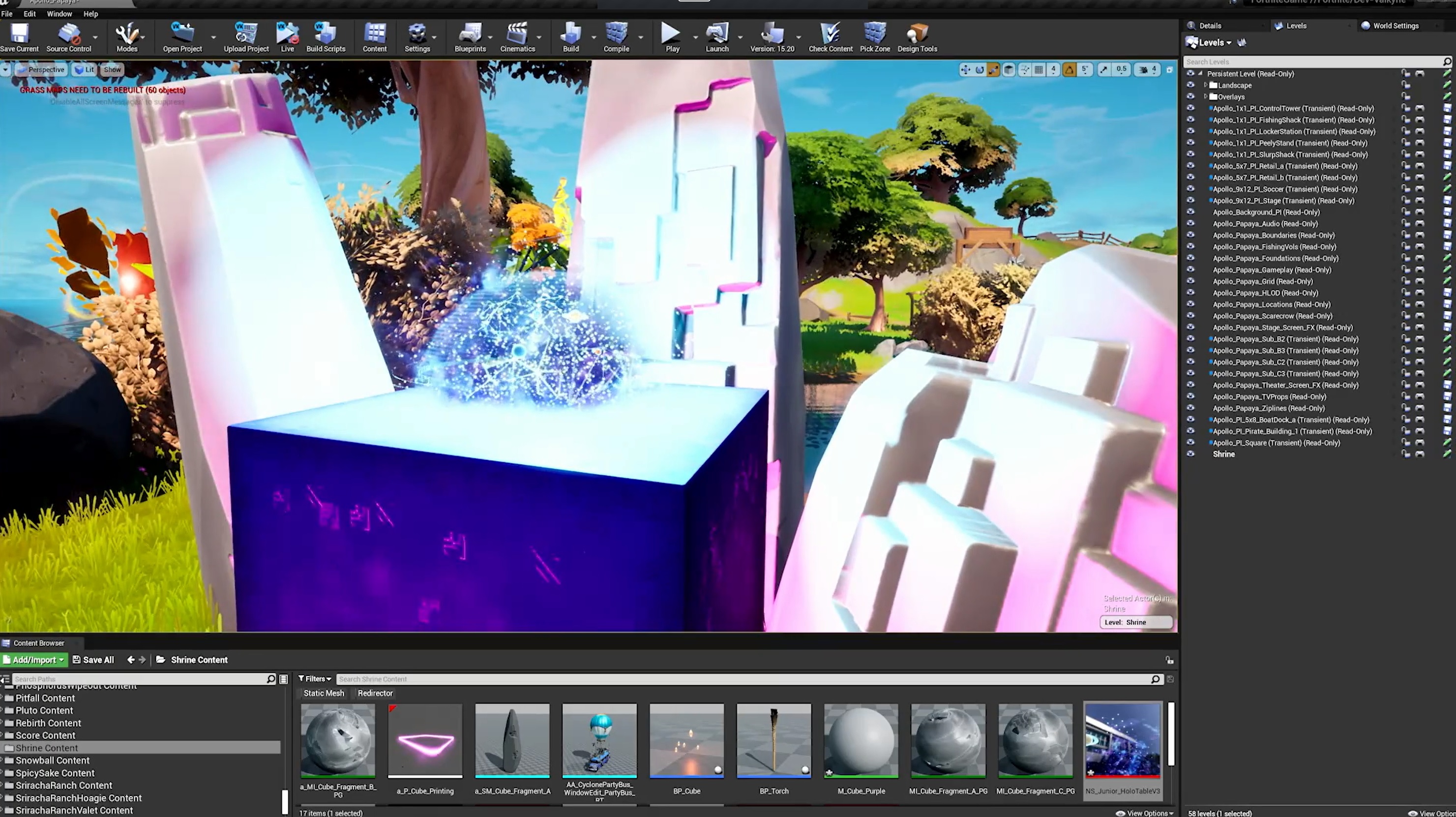
Alongside private servers, a modding community grew around Fortnite Modding Hub. It brings together people learning to modify old and newer Fortnite builds, with discussions about Unreal Engine, tools, tutorials and troubleshooting.
Modders also study the game's classes and systems and experiment with its content. The public FNGameProj repository, associated with Fortnite Modding Hub, contains recreated Fortnite classes. It is not a complete OGFN server, but this research contributes to the tools and knowledge used around older builds.
Discord directories list 2020 as the Hub's creation year. Since no original launch announcement was found to confirm it, that date should be treated as an approximate reference.
Reusing code and giving credit
Skidded projects
In development communities, skid or skidded is slang used to accuse someone of copying another person's code without understanding it, giving credit or admitting where it came from. In OGFN, the term often comes up around reused backends, launchers and gameservers.
Using an open source base with proper credit and permission can be a normal way to learn and contribute. Taking that work, removing its authors and claiming to have built it yourself is what people commonly call skidding. The accusation alone proves nothing: the code history, license and credits are what matter.
A repository explaining its reuse requirements ↗2025–2026 · OGFN today
OGFN today
The current scene includes several kinds of projects. Hosted servers offer an experience players can join directly. Open source projects publish backends, launchers and gameserver components. Self-hosted communities run their own sessions, while Creative projects recreate maps and experiences within official Fortnite.
About the sources
This timeline draws on GitHub repositories, project announcements, articles and community discussions. The surviving records do not establish which prototype was the very first. Dates reflect the evidence available, and forum accounts remain attributed to their authors. Fortnite Modding Hub's listed creation date comes from Discord directories and remains provisional.